
The Reserve Bank of India has opened a special dollar window for three public sector oil marketing companies (OMCs) to meet their daily dollar requirements, aiming to curb the rupee's depreciation amidst global economic uncertainty. Additionally, the RBI has introduced new regulatory measures for the foreign exchange market, including reducing the threshold for derivative transactions without underlying exposure and introducing a Foreign Exchange Risk Reserve (FERR).

The Reserve Bank of India's new Foreign Exchange Risk Reserve (FERR) framework is making it more expensive for banks to hedge dollar interest payments on foreign currency non-resident (bank), or FCNR(B), deposits. Banks are now required to set aside cash equivalent to 20 per cent of their exposure, leading to a significant increase in hedging costs and forward premiums.

The Reserve Bank of India's recent measures, including a dedicated dollar window for state-run oil marketing companies and tightened foreign exchange derivative rules, are expected to provide near-term relief to the rupee's depreciation, but market participants believe global factors and balance of payment dynamics will continue to exert pressure in the medium term.

The RBI can slow the rupee's fall, but lasting stability depends on tackling the root causes of depreciation and attracting foreign investment.

It is important to understand that the rupee's appreciation, driven by the 2013 special swap scheme, reduced India's import costs for petroleum, oil, and gold, points out Dr Ashwani Mahajan, National Co-Convenor, Swadeshi Jagaran Manch.

The Securities and Exchange Board of India (Sebi) is investigating the feasibility of creating a domestically governed artificial intelligence (AI) model for the securities market through a collaborative effort with market participants. This initiative aims to make AI-based regulatory tools secure, affordable, and accessible, especially for smaller regulated entities.

The recent depreciation of the rupee along with sharp fall in the country's foreign exchange (FX) reserves has sparked a debate whether stability of the exchange rate is necessary and desirable. The rupee was one of the least volatile currencies among peers for almost two years before the current downward pressure started in September after the US Federal Reserve lowered interest rate.
Reserve Bank of India Deputy Governor Rohit Jain has stated that India cannot rely solely on bank balance sheets to fund the extensive investment required for its 'Viksit Bharat' (developed India) goal by 2047, emphasising the critical need for deeper corporate bond, foreign exchange, and derivatives markets.

The measures are aimed at giving customers greater control over how and to what extent digital payment channels are used.

The Reserve Bank of India (RBI) and the central government have introduced a package of measures, including tax exemptions for FPIs on government securities and a concessional foreign-exchange swap facility, aiming to attract up to $50 billion in foreign capital. This initiative is designed to strengthen India's balance of payments and potentially cover the projected BoP gap for FY27.

Indian benchmark indices, Sensex and Nifty, closed marginally lower due to elevated crude oil prices, fresh US-Iran tensions, and expectations of a tighter monetary policy from the US Federal Reserve, despite strong domestic GDP growth.
The Reserve Bank of India (RBI) has introduced stricter timelines for banks to process inward cross-border remittances, aiming to reduce delays in crediting funds to beneficiaries by mandating immediate customer intimation and more frequent nostro account reconciliation.

Enforcement agencies have highlighted risks related to money laundering and terror financing, prompting closer scrutiny of crypto platforms operating in India.

The Reserve Bank of India on Friday proposed to allow banks to lend to Real Estate Investment Trusts (REITs) with certain prudential safeguards to deepen the financing pool for the real estate sector.

Indian banks are urging the Reserve Bank of India (RBI) to reconsider its new $100 million cap on net open foreign-exchange positions, warning that the directive could lead to significant mark-to-market (MTM) losses and force an accelerated unwinding of trades, potentially impacting FY26 earnings.

Domestic institutional investors (DIIs), driven by the popularity of mutual funds, have emerged as significant stabilising forces for Indian capital markets amidst global volatility and foreign portfolio investment (FPI) outflows, according to Sebi whole-time member Amarjeet Singh.

"It is quite possible that the rates will remain low in the near to medium term, but that will depend on how conditions evolve," said RBI Governor Sanjay Malhotra.

Sanjay Malhotra has made structural changes to banking regulation to bring down costs and increase efficiency. Plus, he kicked off a benign interest regime. But there are challenges ahead.

Preliminary balance of payments data published on Monday showed that the current account deficit fell to $5.2 billion in the July-September quarter of 2013-14, or 1.2 per cent of gross domestic product.

While SGBs are a sound investment, they aren't worth buying at any price. The interest income you earn from them will not justify paying a high premium.

With a sole mandate of inflation targeting, RBI wears many hats.

India should become a middle-income country and then push to make INR (rupee) a hard currency, and till then, it must promote the settlement of global trade in the local currency, think tank GTRI said on Sunday. Global Trade Research Initiative (GTRI) said that transforming a currency into a hard currency is a complex process that hinges on several pivotal factors. Firstly, economic stability is paramount; a country must exhibit low and stable inflation, consistent growth, and a balanced trade environment.

Currently, FPIs can invest up to $30 billion in Government securities, of which $5 billion is reserved for long-term investors.

The RBI left key policy rates unchanged and cut the GDP growth estimate for this fiscal to 5.5 per cent from 5.7 per cent.

The Reserve Bank is working on a phased implementation strategy for its own digital currency and is in the process of launching it in wholesale and retail segments in the near future, RBI Deputy Governor T Rabi Sankar said on Thursday. He said the idea of Central Bank Digital Currency (CBDC) is ripe, and many central banks in the world are working towards it. Sankar further said CBDC is needed to protect consumers from the "frightening level of volatility" seen in some of the virtual currencies which have no sovereign backing.

Probably 35 bps. There could be even an encore in February 2023 to take the policy rate to 6.5% before the financial year ends, predicts Tamal Bandyopadhyay.

In efforts to move towards a cashless society, the Reserve Bank on Wednesday said it will come out with a concept paper on promoting electronic payments, especially in smaller towns, by November-end.

India's inclusion in JP Morgan's bond index can channel billions of dollars into India. How will the government securities market handle it?

Drop in oil prices and the government's reform agenda has helped India to be out of the Fragile Five group

The Reserve Bank of India (RBI) kept its key policy repo rate unchanged at 8.0 percent on Tuesday, as widely expected, while expressing concerns about risks to its target to bring consumer inflation down to 6 percent by January 2016.

The RBI had in the past expressed its concerns about allowing foreign investors in short-term paper, because it attracted hot money.

China has emerged as the world's third largest investor as Foreign Direct Investment (FDI) from the Communist giant jumped by 17.6 per cent last year defying a global pattern.

As lobbying and counter-lobbying intensify, right now, it looks like a T20 match, discovers Tamal Bandyopadhyay.

India's economic image is not affected due to Adani Group's recent decision to pull out Rs 20,000 crore FPO (follow-on public offers) amid allegations of financial wrongdoings, Finance Minister Nirmala Sitharaman said on Saturday.

The senior RBI official, who assumed office on July 31, a day before he was to retire from the state-run Bank of Baroda as its chairman, said developments in construction technologies should make it possible for developers to bring down home prices.

This is the first time in the RBI's history that a governor is leaving without willing to renew his contract

The Sensex and the Nifty witnessed biggest one day loss in percentage terms since June 24
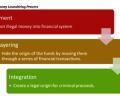
In the Anti Money Laundering (AML) Basel Index 2013 India has been ranked 93rd and 70th in 2012 and 2013 respectively out of 140 countries.

Fintechs need to behave with responsibility and transparency. A lot of mis-selling has been happening. Other issues have been plaguing the fledgling industry -- high interest rates, even higher processing fees, harsh collection process and, most critically, data leakage leading to rampant frauds, points out Tamal Bandyopadhyay.

The global economy is fragile now. It continues to face both long-term and short-term issues.
